
How Much Does It Cost to Demolish a House in Seattle WA?
If you’re planning to tear down a house in Seattle, one of your first questions is probably about cost. It’s a fair question and one that doesn’t have a simple answer because every property is different. A small bungalow in Greenwood comes down faster and cheaper than a two-story craftsman with a full basement in Capitol Hill. Access matters, soil conditions play a role, and what’s inside the walls can change everything.
Most homeowners in Seattle can expect to pay anywhere from $15,000 to $35,000 for a typical residential house demolition, though costs can go higher depending on size, complexity and site conditions. That’s a wide range, and understanding what drives those numbers helps you budget accurately and avoid surprises when estimates start coming in.
What Affects House Demolition Costs in Seattle
The size of your house is the most obvious factor. Square footage directly impacts how much material needs to be broken apart, loaded and hauled away. A 1,200 square foot ranch takes less time and labor than a 3,000 square foot home with multiple levels. More material means more truck loads, more disposal fees and more hours of work.
Basements add significant cost to demolition projects. Breaking apart basement walls, excavating concrete footings and hauling away below-grade material takes time and heavy equipment. Houses on crawl spaces or slab foundations cost less to demolish than homes with full basements simply because there’s less concrete to remove and less excavation required. Many older Seattle homes have basements, which is why local demolition costs tend to run higher than in areas where slab construction dominates.
Construction type matters more than many people realize. Wood-framed homes are the easiest and most affordable to demolish. Brick structures, concrete block construction or homes with stone elements require more effort and specialized equipment. Seattle’s older neighborhoods feature plenty of wood-framed houses with thick douglas fir timbers that are dense and stubborn but still more manageable than masonry construction.
Site access affects pricing significantly. Wide driveways, alley access or large yards let contractors position equipment efficiently and stage debris containers without complications. Narrow Seattle lots, homes surrounded by fencing, mature landscaping or neighboring structures that sit close by all make the work slower and more challenging. When excavators and trucks can’t access the site easily, contractors need smaller equipment or more manual labor, both of which increase costs.
Hazardous materials drive up expenses but can’t be avoided. Homes built before 1980 almost always contain asbestos in some form, whether in siding, floor tiles, roofing or insulation. Testing runs a few hundred dollars, and if asbestos is found, abatement costs several thousand depending on how much material needs removal. Lead paint is equally common in older homes, and proper handling adds expense. These aren’t optional costs but legal requirements that protect health and ensure compliance with environmental regulations.
Permit fees in Seattle vary based on property value and project scope but typically run between $1,000 and $3,000 for residential demolition. The city requires permits for house teardowns, and the application process involves submitting plans, proving utility disconnection and sometimes providing environmental assessments. Prime Demolition and other experienced contractors handle permitting as part of their service, but the fees are real costs that factor into total project budgets.
Utility disconnection adds several hundred to over a thousand dollars depending on which services need termination. Seattle City Light handles electrical disconnection, Puget Sound Energy manages gas lines, and Seattle Public Utilities deals with water and sewer. Each utility charges fees for shutoff and meter removal, and coordinating these disconnections takes time that contractors build into project schedules.
Breaking Down the Cost Components
Let’s look at where your money goes during a typical Seattle house demolition. Labor and equipment represent the largest expense, usually accounting for half or more of the total cost. Demolition crews, equipment operators and project supervision all require experienced professionals who know how to work safely and efficiently on urban residential lots.
Debris hauling and disposal fees add up quickly. Seattle area transfer stations charge by weight or volume for construction debris, and concrete disposal costs more than wood waste. A typical house generates fifteen to thirty tons of material, and hauling that away requires multiple truck loads. Recycling concrete and metal reduces disposal costs compared to landfilling everything, which is why responsible contractors separate materials and process them appropriately.
Hazardous material abatement lives in its own budget category. Asbestos removal can range from $3,000 to $10,000 or more depending on how extensively the material appears throughout the house. Lead paint abatement follows similar patterns. These services require licensed specialists who follow strict protocols, and cutting corners isn’t an option legally or ethically.
Site cleanup and final grading complete the project and represent the final cost component. Contractors remove all debris, backfill excavated areas if needed and grade the lot to prevent water pooling. Some projects include topsoil placement and basic landscaping, though most homeowners handle landscaping separately after the lot is cleared and ready for new construction.
Neighborhood Examples Across Seattle
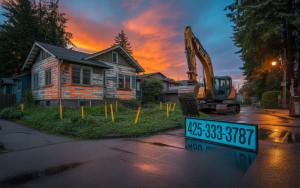
House demolition costs vary slightly by neighborhood based on access, lot size and local conditions. In Ballard, where older homes sit on standard city lots with reasonable access, demolition costs fall in the middle of the typical range. Tight spacing between houses requires careful work, but the neighborhood’s flat terrain and predictable lot layouts keep projects moving efficiently.
West Seattle properties often involve hillside locations where slopes affect equipment operation and debris removal. Homes perched on steep terrain cost more to demolish than flat lot properties because everything takes longer when working on angles. Access down narrow winding streets adds time, and contractors charge accordingly for the extra complexity.
Capitol Hill and Queen Anne feature some of Seattle’s steepest lots and tightest urban spacing. Houses here sit close to neighbors, streets are narrow, and parking is limited. Demolition projects require smaller equipment, careful debris staging and constant coordination with surrounding properties. These factors push costs toward the higher end of the range.
North Seattle neighborhoods like Greenwood, Ravenna and Lake City typically offer better access and more generous lot sizes. Demolition here often costs less than in dense central neighborhoods, though older housing stock and mature landscaping still create complications that contractors must navigate.
Shoreline, just north of Seattle proper, features suburban lot patterns with easier access and fewer site constraints. Demolition costs here tend to run slightly lower than in the heart of Seattle, though the same basic factors still apply regarding house size, construction type and hazardous materials.
How Long Does House Demolition Take in Seattle
Understanding timelines helps you plan budgets since longer projects mean higher labor costs. The permitting phase takes two to four weeks on average, though complex projects or historic district properties can take longer. Once permits are approved, the physical demolition of a typical single-family home takes three to seven days depending on size and whether there’s a basement.
Hazardous material abatement extends timelines by a week or more if asbestos or lead paint requires removal before demolition begins. Weather affects schedules too, especially during Seattle’s rainy months when wet conditions slow work and create muddy site conditions. Most contractors build weather contingencies into project timelines so you have realistic expectations.
Ways to Control Demolition Costs
While you can’t change the size of your house or eliminate hazardous materials, you do have some control over demolition expenses. Getting multiple estimates from licensed contractors helps you understand the fair market rate and identify outliers who quote unrealistically low or suspiciously high.
Timing your project for late spring or summer when weather is drier can help contractors work more efficiently, potentially reducing labor hours. However, demand is higher during good weather months, so any savings from faster work might be offset by seasonal pricing.
Handling some site prep yourself, like clearing personal belongings, disconnecting appliances or removing landscaping you want to save, reduces the scope contractors need to handle. Just be careful not to attempt utility disconnection or asbestos work yourself, as these require licensed professionals and improper handling creates serious liability.
Choosing partial demolition where the foundation is broken and buried rather than fully excavated and hauled away saves money. This approach works fine if you’re rebuilding on the same footprint and don’t need complete foundation removal, though future construction plans should guide this decision.
Why Accurate Estimates Matter
Low-ball quotes might look attractive initially but often lead to surprise charges and project delays. Contractors who provide suspiciously cheap estimates sometimes underbid to win work, then add charges for permit fees, hazardous materials, disposal costs or site conditions they claim weren’t visible during the initial assessment. These practices create frustration and budget problems that homeowners didn’t anticipate.
Detailed estimates from experienced contractors break down costs clearly so you understand what’s included. Prime Demolition and other reputable Seattle companies visit properties, assess conditions thoroughly and provide comprehensive pricing that covers permits, utilities, demolition, hauling and cleanup. Transparent estimates protect you from surprises and help you budget accurately for the entire project.
Getting Started with Your Seattle House Demolition
If you’re ready to move forward with tearing down a house in Seattle, start by contacting local demolition contractors for site assessments. Most companies provide free estimates after visiting your property and evaluating the house, access and site conditions. Prepare questions about timelines, what’s included in pricing, how permits are handled and what happens if unexpected issues arise during the project.
Check that contractors are licensed, insured and bonded. Washington State requires contractor licensing, and reputable companies carry comprehensive liability insurance and workers compensation coverage. Ask for proof of insurance and verify licenses through the state Department of Labor and Industries website.
Discuss your timeline and any constraints you’re working within. If you need demolition completed by a specific date to start new construction, communicate that clearly so contractors can schedule accordingly. Understanding your priorities helps them plan projects that align with your needs.
Ask about hazardous material testing and abatement. Some contractors coordinate testing and abatement through their own network of specialists, while others expect homeowners to arrange these services separately. Clarifying who handles what prevents confusion and delays.
Final Thoughts on Seattle House Demolition Costs
Demolishing a house in Seattle is a significant investment, but it’s often the necessary first step toward building the home you want or preparing property for development. Costs range widely based on factors specific to each property, but understanding what drives pricing helps you budget realistically and work effectively with contractors.
Most Seattle homeowners pay between $15,000 and $35,000 for residential house demolition, with that range reflecting differences in house size, basement presence, access conditions and hazardous material requirements. Getting detailed estimates from experienced local contractors gives you accurate pricing for your specific situation.
Prime Demolition provides house demolition services throughout Seattle and the surrounding metro area with transparent pricing, professional execution and careful attention to the site conditions and regulations that shape every project. If you’re planning to tear down a house, reach out for a free estimate and let experienced professionals guide you through the process with clear information and reliable service that keeps your project on budget and on schedule.
